







Scooter Safety: The Essential Guide for Every Rider
Have you ever kicked off on a new scooter only to find the pavement hides more surprises than your favourite roller-coaster? That first wobble can flip excitement into worry in a heartbeat, but a bit of planning before you roll keeps the fun alive.
Think back to the last time a loose stone or sudden puddle sent your heart racing. Would you want to go through the same unpredictable scenario again? A few smart habits and the right gear keep your smile wide long after you park the deck.
What Gear Do You Need to Ride a Scooter?
Your head, joints and palms take the hit when things go sideways, so covering them matters more than deck stickers.
Having well-designed and durable protective scooter gear means it soaks up shocks that your bones and skin would otherwise feel. Some of the key pieces you should consider include:
Helmets
A helmet tops the list when it comes to safety. Choose sturdy and reinforced helmets that wrap your head but do not feel like a brick. Most quality lids combine a tough outer shell of ABS or polycarbonate with precision-shaped foam inside; the foam adapts to your head shape over a few rides, so fit improves with time. Sweat-wicking liners pull moisture away during warm afternoons, keeping the view clear and your hair drier.
Stick with half-face, also called open-face, models for the best mix of protection and field of view. Pick the right size, from XS to XXL, by measuring the widest part of your head and matching it with the size chart. When you try one on, shake your head to see how it performs. It should stay put without squeezing. Fasten the chin strap until only two fingers slide under it.
There’s a wide colour range, so you can easily find an option that matches your style or even the scooter itself. For instance, if you cruise on the Root Industries Type R Complete, you can get a multi-colour helmet for the Rocket Fuel model or a golden version for your Gold Rush scooter.
Safety Pads
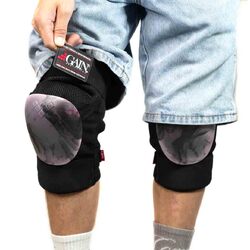
Your knees and shins hover just a few centimetres above rough concrete, so they deserve solid coverage. Put on shock-absorbing and ergonomic pads built with layered foam that spreads impact across a bigger area. A hard plastic cap over the foam lets you slide instead of stopping dead, which cuts down scrapes and bruises.
Knee-shin combos guard the whole lower leg against pedal bites during missed landings, while elbow sleeves protect arms in sideways spills. Ankle guards keep tendons safe from crank hits that swell up overnight. Mouthguards may feel odd at first, but they shield your teeth during rail tricks and tall drops.
Buying a full pad set saves money and keeps colours matching, which makes it easier to remember each piece. When you try them on, bend the joint all the way; the pad should move with you and not twist. Wash quick-dry fabrics on a gentle cycle and line-dry them to dodge the mildew smell that lingers in old skate bags.
Try to crouch, jump and twist. The pad should move with you and not spin around the joint. Rinse sand and grit off with cold water after each session, wash quick-dry fabrics on a gentle cycle and line-dry them to dodge the mildew smell that clings to old skate bags. Pads last longer when you store them flat in a soft sack instead of cramming them under the deck.
Gloves
Hands hit the ground first in almost every fall, so breathable and high-grip gloves earn their spot in your pack. A thin synthetic palm lets you feel the bars, while silicone dots add extra traction on damp grips. Some brands add spandex finger gussets that stretch in every direction, which boosts finger flex for bar spins and quick brake pulls.
Modern designs include touch-screen-ready pads on the index finger and thumb, so you can answer calls or check maps without peeling the glove off. Four-way stretch twill spandex backs move with you and wick sweat away, cutting down on blisters during long rides. Padded knuckles offer a small buffer against handlebar smacks, although racers often choose minimalist styles for the closest feel.
Look for double-stitched seams and a pull tab at the cuff, so you can yank the glove on without tearing the wrist opening. Many pairs are quite lightweight, which means they feel more like a second skin than bulky armour. Designs range from plain black to neon patterns and even comic art, so you can match your deck or stand out in group rides.
Slide your hand in, cinch the wrist strap snug and make a tight fist, and the glove should hug your palm without pinching. If the material bunches at the base of your thumb, size down. Wash gloves on cold, air-dry them flat and rotate pairs if you ride daily; fresh gloves grip better and smell nicer.
If you need help or advice, please contact our friendly and knowledgeable team today!